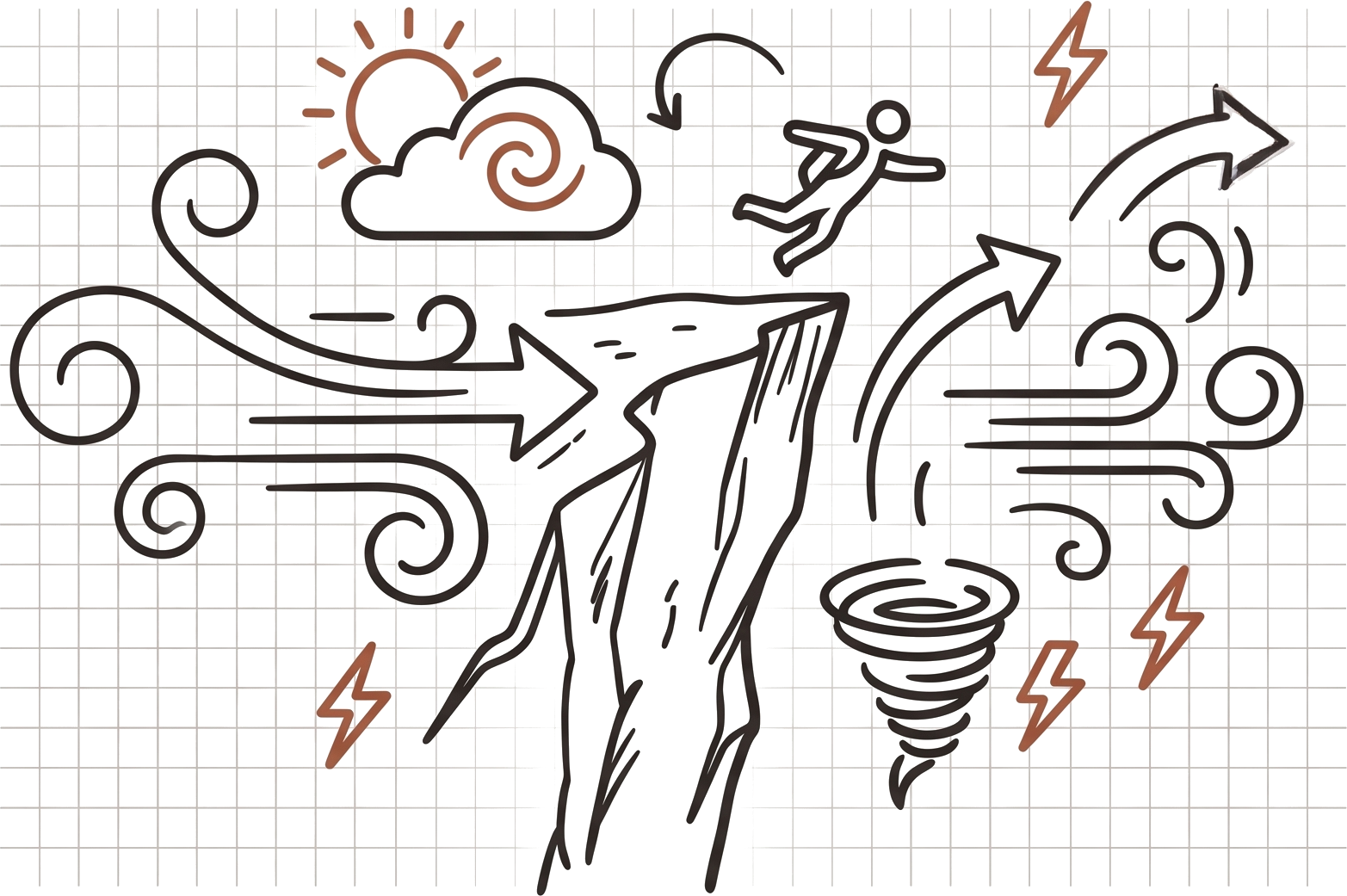
Solar Heating and Thermal Generation
Solar heating and thermal generation describe how the sun and ground together produce thermals, the rising air columns that affect all air sports.
Surface heating
The sun heats the ground, not the air. Heat then transfers into the thin air layer resting on the surface.
Different surfaces absorb that heat at very different rates. Dark, dry, hard ground heats fast: asphalt, plowed fields, bare rock. Green forest, wet soil, lakes, and snow stay cool. They reflect sunlight or spend energy evaporating moisture.
- A dark, plowed field next to green pasture on a sunny morning. After an hour the dirt shimmers with heat waves. A dust devil kicks up in the middle of the field, rustling nearby trees. That is a thermal breaking loose.
- An east-facing cliff catching morning sun while the canyon floor stays in cold shadow. The rock heats like a radiator, pushing warm air straight up the face. Launching into that zone means immediate strong lift.
The thermal
As the ground heats, that thin air layer grows lighter than the cooler air above. For a few minutes it pools, held in place by friction. Then it breaks loose and erupts upward as a spiraling column. That column is a thermal.
As the thermal lifts off, cooler air rushes in from the sides to fill the gap. This often shows up as a sudden inward gust just before the thermal breaks.
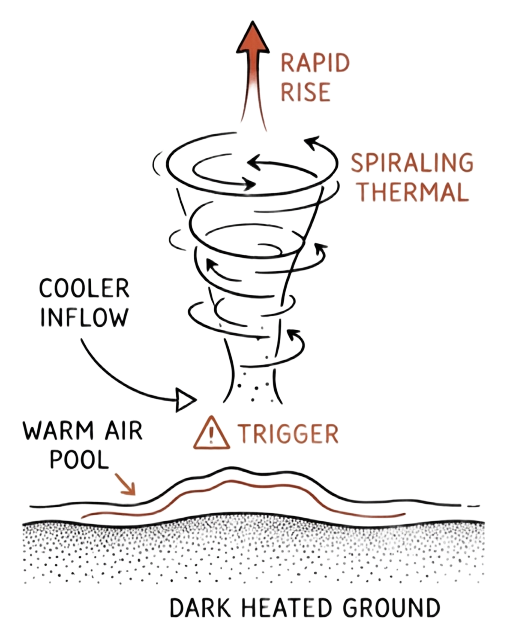
The warm air pools at the surface before breaking loose. Cooler air rushes in from the sides as it erupts upward.
The column climbs until it cools to match the surrounding air. Its moisture condenses into a cumulus cloud at the top. That cloud marks the thermal's location.
- Darkest, driest terrain facing the sun generates thermals first and hardest. Avoid launching downwind of lakes or dense shaded forest when hunting for lift.
- Thermals don't rise steady. They pulse: a lull, a heating surge, then the thermal breaks. Vegetation going quiet, then bending inward toward a hot spot, is the thermal pulling in air before it fires.
- On very dry days thermals can fire without forming cumulus clouds at the top. These are called blue thermals. A clear sky above baking rock still means thermals firing, and they can hit an unwary pilot or jumper as sudden turbulence.